AI Agents Are Coming for Your Hotel — Here Is What Actually Changes
Tyler Mayberry breaks down how AI agents will reshape hotel distribution, operations, and pricing — covering schema.org ghost hotels, attribute-based pricing, dynamic housekeeping, OpenClaw security, and the hidden 1.6x cost reality.
The Shift from Search Engines to AI Agents — And Why Hotels Need to Prepare Now
The travel distribution stack is undergoing its most significant architecture change in two decades. For most of the internet era, hotels competed for visibility on search engines — SEO, meta descriptions, Google Ads, OTA rankings. That game is not over, but it is getting a new player on top of it. AI agents are becoming the first interface between traveler and property, and the rules of that game are fundamentally different from anything the industry has navigated before.
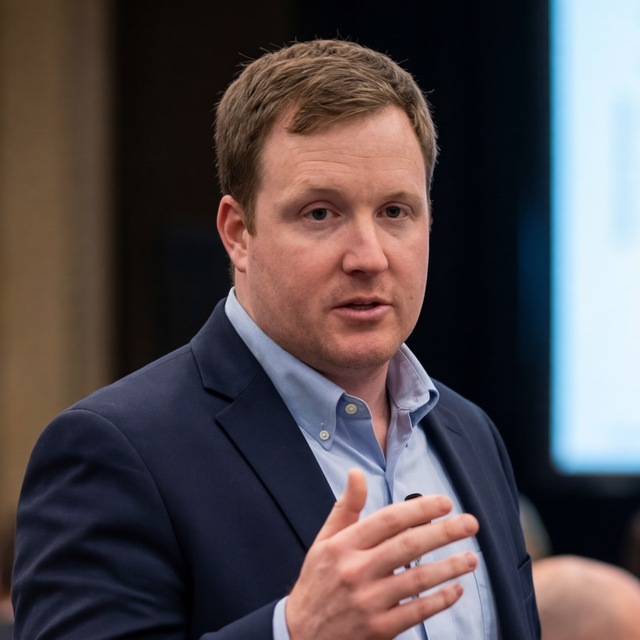
Tyler's presentation at the conference — dense, fast-moving, and deliberately provocative — laid out the full picture: what AI agents are, how they work in a hotel context, what they break, what they unlock, and the real costs that nobody puts in the sales pitch. This article is the complete walkthrough of everything he covered.
You Cannot Outmath an Algorithm
That was the blunt opening of Tyler's technical section. "You cannot outmath an algorithm. There are no tricky tricks anymore." The context was structured data — specifically, schema.org markup and how AI agents use it to evaluate and select properties on behalf of travelers.
When a traveler's personal AI agent is given a task like "find me a quiet hotel room in Austin for two nights under $200," it doesn't browse the web the way a human does. It queries structured data. It looks for properties that have complete, accurate schema markup — the standardized data vocabulary that tells an AI what a hotel is, what amenities it has, what its rooms include, and how it scores on specific traveler preferences.
Properties with comprehensive schema markup show up with a high score. Properties without it are effectively invisible. Tyler called this the "ghost hotel" problem: "You can have million-dollar chandeliers, but without structured data, you do not exist to the algorithm." The business implication is not subtle — investing in beautiful properties while leaving the data layer empty is a strategy for being skipped by every agent-powered booking in the future.
The Three Categories of AI Agents That Touch Hospitality
Tyler organized the agent landscape into three distinct categories, each with a different function and a different technical profile.
Frontend agents sit between the traveler and the property. They read reviews, compare pricing in real time, check availability against live PMS data, and present options directly to the traveler. These are the agents that will increasingly handle the 80% of transactional inquiries that currently drive phone calls and email threads. Their competitive pressure on OTAs is direct — if a hotel's own agent can answer the question faster and more accurately than Expedia's, the direct booking wins.
Backend operational agents run inside the hotel's own systems — housekeeping scheduling, maintenance routing, inventory management, staff coordination. These are the most immediately actionable agents for independent operators because they run on internal data that the hotel already has, and they don't require guest-facing AI sophistication to deliver ROI.
Research agents pull competitive intelligence, market positioning data, pricing trends, and guest preference patterns. These feed the other two categories and represent the highest-leverage use of AI for strategy — the insights that inform how to price, what to offer, and where to invest.
The Great Unbundling: Attribute-Based Pricing and the A2A Revolution
Tyler spent significant time on what he called "the unbundling thing" — and called it "huge." The concept: AI agents enable a shift from room-night pricing to attribute-level pricing, where individual room characteristics can be sold as discrete data points rather than bundled into a single nightly rate.
The example he gave live: a quiet room on a high floor, distance from the elevator, specific view type, pillow firmness preference — each of these becomes a purchasable attribute. An agent representing the traveler can parse all of these options across a hotel's inventory and present a personalized bundle. The guest who wants the corner suite with the city view and a firm mattress gets exactly that, without having to navigate a generic rate plan.
For hotels, this unlocks a new revenue model. "You cannot outmath an algorithm" cuts both ways — the same agents that evaluate your property are also the ones that will surface your attribute options to guests who want exactly what you have. Tyler described it as the mechanism that gives independent hotels a shot against OTA bundle pricing: "Hotels win direct bookings by unbundling the physical space into individual purchasable data points."
The technical infrastructure enabling this is the A2A API — agent-to-agent communication. When a traveler's personal agent talks to a hotel's inventory agent, they exchange the exact puzzle pieces needed to build a customized booking. Tyler called this the core enabler of personalized travel at scale, and said it clearly: "This is huge. Hotels are going to start getting a lot more direct bookings again. OTAs are going to be pushed out of the picture."
The Death of Transaction Loyalty — And What Replaces It
One of Tyler's more provocative statements: "Transaction loyalty is dead." His reasoning was specific. Traditional loyalty programs — points, tiered status, direct mail — were designed to reward behavior patterns that an algorithm can now calculate and optimize away in real time. A travel agent's personal AI weighs loyalty status as one input among many when evaluating a booking. It is a number in a prompt, not a binding commitment.
The replacement is experience loyalty — the depth of preference data a hotel holds about a guest, and the degree to which its agents can act on that data to deliver personalized outcomes. When an agent can say, "this hotel knows you prefer high floors and quiet zones, and they have a room that matches at $15 above base," that specificity is more powerful than any points balance. Tyler's framing: the hotels that survive this transition will be the ones that captured preference data richly enough to feed the agents that travelers are using.
Dynamic Housekeeping: IoT Sensors Meet Guest Demographics
One of the most immediately operational concepts Tyler covered was dynamic housekeeping — using IoT sensor data cross-referenced with guest demographic information from the PMS to calculate exact room turnover times and assign housekeeping routes with precision.
The mechanism: door sensors, cabinet sensors, AC current monitors, and shower flow sensors all feed into a central AI that knows, for example, that a room occupied by a family of four had the door open 127 times in three days, the shower ran 17 times, the TV was on for 72 hours, and the fridge was opened 76 times. That is a room that took significant use. By contrast, a solo business traveler who left the door four times during their stay is a fast turnover.
The AI doesn't just know this after the fact — it predicts it. "Because it tracks so much data and it gets so much data every single day, it will know exactly how long it should take to clean that room." That prediction feeds into daily housekeeping routing, replacing the static checklists and supervisor judgment calls that characterize most hotel cleaning operations today.
The efficiency claim: "No more juggling housekeeping sheets for all your housekeepers." The operational reality is that this requires investment in sensor infrastructure and PMS integration, but the unit economics improve meaningfully at scale. Tyler was direct about this not being theoretical for large operators — this is active deployment territory.
Predictive Maintenance 2.0: Self-Healing Infrastructure
The maintenance section built on the same sensor infrastructure. The AI monitors AC units in real time for electrical draw anomalies — a fan drawing 2 amps instead of the normal 1.5 triggers an 80% failure probability prediction within 48 hours. When that threshold is crossed, the system doesn't alert a manager and wait. It generates a purchase order, orders the replacement part, and schedules a mechanic — automatically.
Tyler's example: "The AI automatically generates a PO, orders the part, and schedules the mechanic while the guest is at the spa." This is the "self-healing infrastructure" concept in practice — the building responds to its own maintenance needs before they become guest-facing failures. The agent ecosystem handles procurement, scheduling, and guest communication simultaneously.
The Hilton case study anchored this section with a real number: "Hilton saved over a billion dollars by abandoning building-wide thermostats for minute-by-minute room-by-room AI control." The mechanism was algorithmic weather integration and predictive heating — stripping out the crude guest-facing thermostat controls and replacing them with AI that manages thermal comfort at a room level, learning from occupancy patterns and weather forecasts. "They stripped out all the little thermostats that all the customers complain about and they just used algorithmic weather integration."
The Empathy Preservation Thesis
Tyler made a deliberate turn here from technical capability to human purpose: "You want to automate the transaction and you want to preserve the empathy and the hospitality. You want to make it human again."
The observation was about what gets lost when staff are buried in transaction processing. The front desk agent who is constantly keying check-in data into a slow system has no bandwidth for the kind of genuine guest engagement that drives loyalty. "Who likes it when you get one of those front desk clerks chicken pecking at the keyboard on a slow computer trying to just get them checked in when they could be getting to know the guest and being hospitable to him using empathy?"
The argument is not that AI replaces hospitality — it removes the mechanical work that prevents humans from practicing it. Freeing staff from repetitive transactional tasks is the primary workforce lever for independent operators who cannot afford large front-of-house teams. The goal is robot mode for the work that machines do well, and human mode for the work that only humans can do well.
The Hidden 60%: What AI Infrastructure Actually Costs
Tyler's cost transparency on this section was unusual for a talk of this type. "If a vendor quotes $100K year one, it'll actually cost you $160K." That 1.6x multiplier covers what the initial proposal doesn't include — and he named them explicitly.
Cloud compute — agents have to live somewhere. Most deployments go to cloud infrastructure, which means renting GPU cycles and cloud compute to run the models. At meaningful operational scale, this is not trivial. Tyler noted that local deployment is an alternative but introduces a separate set of complexity tradeoffs.
Legacy database integration labor — almost every hotel has integration challenges connecting their existing data to agent systems. "I don't think I've ever ran into a hotel that doesn't have some sort of database integration issue." Getting property data — room inventory, pricing, availability, guest history — into a format that agents can use requires data cleaning, enrichment, and often custom integration work that doesn't show up in the software licensing line.
Compliance and security audits — real security audits and penetration testing to validate the container isolation architecture. "They can cost up to $30K. It's not mandatory $30K, but it can be expensive if you're a big hotel."
The 1.6x multiplier is not a reason to avoid AI investment — it is a reason to budget honestly. Tyler framed it as the difference between a realistic project and a vendor pitch that looks cheaper than it is.
OpenClaw, Shadow AI, and the Security Problem Nobody Talks About
Tyler spent a significant portion of the talk on security architecture — and opened with an uncomfortable admission: OpenClaw is simultaneously the most powerful AI software you can implement and a serious enterprise vulnerability if not configured correctly.
The core tension: "Employees loved it because it could read emails, run terminal commands, and access local network drives to automate workflows. The exact architecture that made it a brilliant personal assistant made it the most dangerous enterprise vulnerability of the decade."
The specific exploit he described — a one-click phishing attack that hands an attacker the OAuth token — is now patched. But the class of vulnerability it represented is structural to how personal AI assistants work: if an agent has broad access to a user's digital environment, that access is a target. "Once the bad guy has access to the AI, your AI has access to everything. All your passwords, all your login, everything on your computer."
The concept Tyler introduced here is shadow AI — AI that employees install and configure themselves, outside of IT visibility, because they find it useful for their work. "This is one that your employee wants to put on the computer because they think it's cool and they want to use it and they want to automate all their emails and workflows." The security risk is that the user explicitly grants the AI permission to everything — email, PMS, calendar — and the EDR security tools cannot distinguish between the legitimate user and the AI acting on the user's behalf, because the user authorized the AI directly.
Claw Hub — the marketplace for OpenClaw skills — compounds this risk: "If you put the wrong skill on your OpenClaw, it could make it vulnerable." Skills with broad permissions from unverified sources are a direct attack surface.
Nemo Claw: Nvidia's Answer to the Security Problem
Nvidia's Nemo Claw is OpenClaw hardened for enterprise deployment — containerized by default, with OpenShell providing an isolation layer between the agent and the host system. Tyler called it "OpenClaw with enterprise-grade security out of the box." The key architectural feature is websocket sandboxing: each agent's network communication is isolated so that a compromise in one container cannot move laterally to others.
The limitation Tyler has been consistent about: Nemo Claw only supports Neotron natively — Nvidia's own open-source model. "The issue with Nemo Claw is that you can't put those smart Frontier models to be your orchestrator in QA manager." The model lock is a genuine constraint for use cases that require frontier-level reasoning. Tyler's resolution for clients: containerize OpenClaw with Docker directly, which achieves the same isolation without the model restriction, at the cost of building it yourself.
The Three Non-Negotiable Vendor Questions
For hotel operators evaluating AI vendors, Tyler left three questions that he said will filter out most inadequate proposals within the first five minutes of a sales conversation.
Question one: Can it write to my PMS?
If the answer is no, or "we can read from it," the operator is buying a chatbot, not an agent. "You're buying the intern back in 2024. You don't want the intern. You want the agent, the general manager with full power." Full power means write access — not just reading data, but taking things with it.
Question two: How do you sandbox websockets?
This is the technical depth test. If the vendor does not understand container isolation architecture, they do not understand the security model. "If they do not understand OpenClaw container isolation architecture, stop talking to them. You need to get them to explain how they sandbox websockets. If they start brushing it off or backing away, move on."
Question three: What is your protocol for model drift?
Model drift is the tendency of agents performing repetitive tasks to gradually deviate from their original parameters — going sideways over iterations until they are no longer doing the same job. "Agents who are doing a lot of stuff over and over again, they keep doing their thing. They go straight up. And as they go, they start to drift. And then you realize they're not even doing the same thing anymore." Preventing drift requires continuous retraining on fresh data. If the vendor does not have a defined protocol, the agent will decay and begin generating incorrect outputs — including pricing recommendations.
The Regulatory Fracture: EU vs. Middle East and Asia
Tyler outlined a growing divergence in how different markets approach AI regulation. The EU AI Act requires explicit opt-in, strict privacy boundaries, and transparent logs for every AI interaction — each action must be logged and permission verified before execution. Tyler called this "ridiculous" in terms of operational friction: "It just slows everything down and creates so much friction and is a nightmare to deal with."
By contrast, Middle East and Asia markets are moving toward frictionless identity verification using biometric and facial recognition data. "They just get the data once, they're good to go. They're in the clear and just frictionless, smooth, and easy." Tyler framed this not as a moral judgment but as an economic observation: "It's really going to slow that area of the world down as far as growth with AI, which really sucks." The US sits somewhere in between, with California's AI laws partially resembling EU requirements while the rest of the country operates with fewer restrictions.
The 80/20 Rule for Independent Operators: Getting Started for $100/Month
The closing section of the talk pivoted directly to action. Tyler acknowledged that the full enterprise architecture he described — multi-agent swarms, IoT sensor infrastructure, predictive maintenance systems — is not accessible to most independent operators at the outset. But he was explicit that the starting point is much lower than the ceiling.
"But you can get started for $100 a month, guys. You really can." The path: use cloud-native platforms like Muse or Hospitable that have AI natively integrated into their core architecture. "These things work out of the box. You just got to take the time." The 80/20 rule as he applied it: "A small boat boutique hotel can get rid of a lot of the robotic work. Free up your staff. Let them do hospitality. Start implementing some basic automations with AI agents that save you a lot of time."
The counterintuitive closing: "This is the technology you implement where you stop dealing with technology. So think about that." The pitch is not that AI adds more to manage — it is that AI automates the management layer so humans can return their attention to the actual work of hospitality.
The Final Paradox: Designing for Human Preference or for the Algorithm?
Tyler ended with a question he said he did not fully answer — and deliberately left open. "The question, at what point is human preference being mathematically simulated rather than actually served?"
The end state he described — A2A, where personal algorithms negotiate with hotel algorithms in real time, optimizing physical world attributes to satisfy digital scoring systems — raises a genuine question about what hospitality is actually optimizing for. If hotels increasingly configure their offerings to score well on the agents that travelers use, are they serving human preference or are they serving the algorithmic model of human preference?
His answer, such as it was: "I'm not sure if I know it to be honest with you. Just something to end on." The final framing was the unbundling opportunity — not just pillows, but any discrete attribute a guest might value — and the invitation to tyler@hotel-win.com to work through what this means for specific properties.
Want this automated for your business?
See your first custom automation live in 7 days, or it's free.
Email Tyler